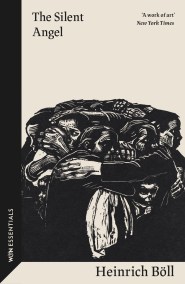
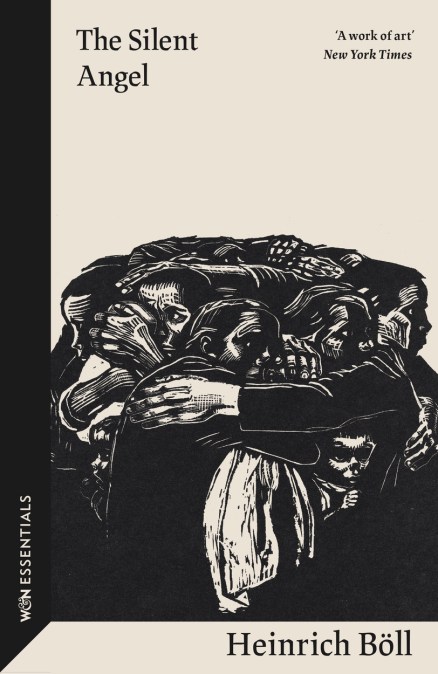
May, 1945. Carrying the coat of a comrade who died in his place, German soldier Hans Schnitzler wanders the bombed-out streets of Cologne.
In search of the dead man’s widow, he meets a woman as lost and grief-stricken as himself. At first, the two strangers envy the dead and struggle to imagine a future in their shattered world. But slowly, they begin to find solace in each other – until they realise, together in a ruined apartment without food or family, that they have found a final, flickering ember of hope.
Unpublished during his lifetime and recovered decades after his death, Heinrich Böll’s first novel is now hailed as one of the most important works of trümmerliteratur (literature of the ruins) as well as a testament to the German Nobel Prize-winner’s extraordinary genius.
A W&N Essential with an Introduction by Claire-Louise Bennett
In search of the dead man’s widow, he meets a woman as lost and grief-stricken as himself. At first, the two strangers envy the dead and struggle to imagine a future in their shattered world. But slowly, they begin to find solace in each other – until they realise, together in a ruined apartment without food or family, that they have found a final, flickering ember of hope.
Unpublished during his lifetime and recovered decades after his death, Heinrich Böll’s first novel is now hailed as one of the most important works of trümmerliteratur (literature of the ruins) as well as a testament to the German Nobel Prize-winner’s extraordinary genius.
A W&N Essential with an Introduction by Claire-Louise Bennett
Reviews
So begins what was Nobel-winner Boll's first novel, a touching love story and trenchant study of moral decay . . . lyrical, spare and somanbulisitic
A work of art . . . In it the major themes of Böll's career - marriage, religion and abuses of power that undermine both - are handled with a poetic authority rare to first-time novelists
His first and possibly his finest novel
We are in the hands of a master craftsman
This excellent novel is a story of love among the ruins
Amazing and most eloquent . . . this gripping novella reads like a sketch for a masterpiece
A beautiful, urgent novel . . . as perfect as anything Boll ever wrote
Boll creates a brittle, intense love between two people who are bewildered that they still are capable of love
Of all the literary works written at the end of the 1940s, only The Silent Angel gives some idea of the depths of horror then threatening to overwhelm any who really looked at the ruins around them
An impressive early achievement in the career of one of Europe's twentieth century literary masters